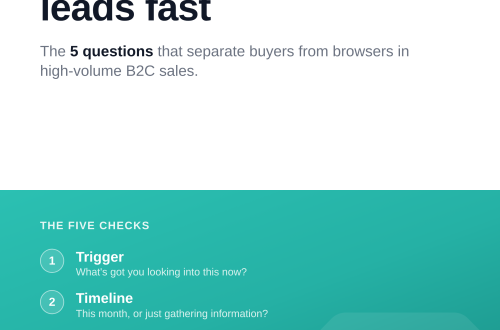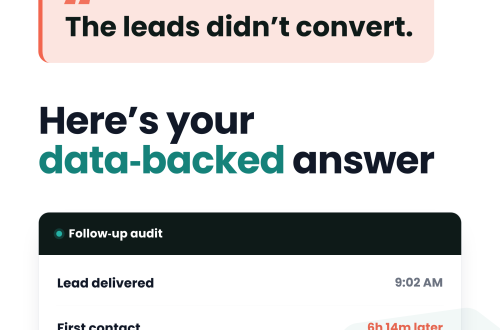
In more than ten years advising sales teams, I have sat in the same meeting more times than I can count. The client says the lead quality is poor. The agency says the follow up is poor. Both point across the table. You prove lead quality to agency clients one way: with follow-up tracking that records when each lead arrived, who contacted it, how quickly, and what happened after.
I learned this the slow way, by watching good leads die in the gap between delivery and the first phone call. A lead that does not convert is not automatically a bad lead. Most of the time, though, it is a lead nobody worked fast enough. Follow-up tracking is how you stop guessing and start showing the client what actually happened.
Why “your leads are bad” is usually the wrong fight
Here is the problem with the lead quality argument. It cannot be won without data, and most reporting brings none to it. Good lead management for Facebook ad agencies should record what happens after a lead comes in. Most tools stop at the delivery itself.
The monthly report shows leads generated, cost per lead, and a graph of impressions. Then it ends. It says nothing about what the client’s team did once each lead landed.
So the meeting becomes opinion against opinion. The client feels the leads were weak because the sales floor felt slow. The agency feels the sales floor was slow because the ads were fine. Nobody can prove a thing, and the retainer gets thinner every month.
Follow-up tracking changes the ground you stand on. Once you record response time and contact attempts, you are no longer arguing about feelings. You are reading a log.
The clinic that blamed the leads
A few years ago I was managing sales performance for a clinic running Facebook ads. The owner called the leads poor quality because very few turned into booked consultations. On paper it looked like an ad problem.
I asked to see the follow-up process, not the ad account. That is where the real story was. After I dug in, I found the team had contacted several enquiries hours after they came in, and nobody had called the rest at all. The reports showed lost leads, but they never explained what happened between a lead arriving and a lead going cold.
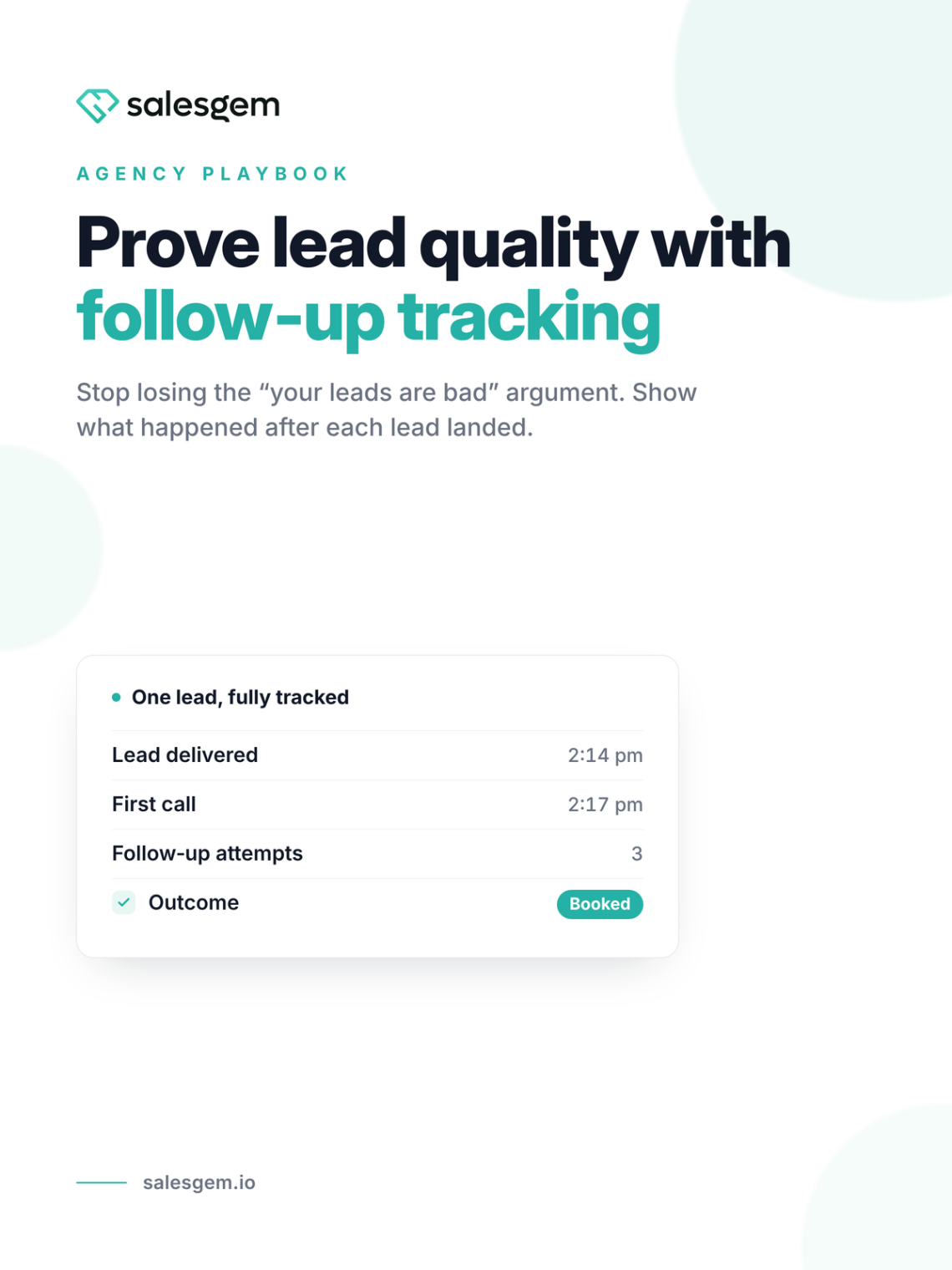
So I started tracking four things: when each lead arrived, when the team first called it, how many follow-up attempts it received, and the outcome. Within two weeks the pattern was obvious. Many of those “bad” leads had already booked with a competitor before anyone from the clinic picked up the phone.
The lesson stuck with me. A lead that does not convert is not automatically a bad lead. Sometimes it is a good lead that waited too long. Before you let a client judge lead quality, separate the leads nobody contacted from the prospects who were genuinely not a fit. Then take those records into the review.
The accountability playbook
Most lead quality fights end the moment you can show a clean record of what happened after delivery. I call it the accountability playbook. It tracks three things, and it works in any industry.
Timestamped delivery
Record the exact moment each lead arrives from the campaign. Not the day. The timestamp. This is the clock everything else runs against. When a client says a lead was weak, the first question is simple: how long did it sit before anyone called. Without a delivery timestamp you cannot answer that, and the client fills the silence with blame.
Contact attempts
Log every attempt to reach the lead. First call, second call, the WhatsApp message, the voicemail. Record who made the attempt and when. But one missed call is not follow-up. Five leads touched once and then dropped is a process problem, and it is a problem you can show instead of describe. This is also where speed to lead becomes visible, because the time between delivery and first contact sits right there in the log.
Outcome logging
Close every lead with an outcome. Booked, not interested, wrong number, no answer after five attempts, bought from a competitor. An outcome turns a vague “it did not convert” into a specific reason. When you sort a month of leads by outcome, the uncontacted pile and the genuinely unqualified pile separate themselves, and the client can see the difference with their own eyes.
The service business that could not link leads to revenue
The second pattern shows up everywhere. The agency reports healthy lead volume, and the client still cannot connect those enquiries to real revenue.
I saw it clearly with a local service business. New leads from the campaigns kept losing attention to walk in customers and existing prospects who felt more real to the sales team. The leads were there, but the attention was not.
I recommended tracking each lead across its whole life: the campaign it came from, the first contact, every follow up, the appointment if the team booked one, and the final result. Once those records existed, the leaks were easy to find. For the first time we had evidence beyond impressions and cost per lead.
That changed the client conversation completely. Instead of arguing about whether the ads or the sales team were at fault, I could point to exactly where prospects dropped out and recommend two fixes: faster response time and more consistent follow-up. The advice I give every agency manager now is the same. Connect campaign data to sales outcomes. Report how many leads the team contacted, how fast, how many appointments they booked, and where people fell away. Present it plainly, so the numbers build trust rather than start a fight.
A monthly client report template that ends the argument
The report is where all of this becomes proof. A strong monthly report does not hide behind impressions. It walks the client from leads delivered to money, and it names the gaps honestly.
Here is a template I hand to agency teams. The sample numbers are only there to show the shape.
| Metric | What it shows | Sample |
|---|---|---|
| Leads delivered | Total leads sent to the client this month | 212 |
| Average time to first contact | Speed from delivery to first call | 6 hours 40 minutes |
| Leads contacted within 15 minutes | How often the team hit the window that matters | 18% |
| Leads never contacted | The uncontacted pile | 41 |
| Follow-up attempts per lead | Whether the team worked leads or touched them once | 1.3 |
| Appointments booked | Leads that reached a real conversation | 37 |
| Closed or won | Final outcomes tied back to campaigns | 14 |
| Lost to slow follow-up | Leads that went cold before first contact | 23 |
Notice what this report does. It puts the client’s own follow up next to the leads you delivered. If nobody contacted 41 leads and 23 went cold before the first call, the lead quality question answers itself. The conversation moves from “your leads” to “our process,” which is the only version of this conversation that keeps the account.
Send the same report every month, in the same format. Consistency is what makes a client trust the numbers when the news is good and when it is not.
How this plays out across industries
I have watched this exact dynamic in a lot of different rooms. The follow up gap looks a little different in each one.
In clinics and aesthetic practices, front desk staff work leads between walk ins and phone calls. A consultation enquiry that arrives at 9pm often waits until the next afternoon, by which point the patient has booked elsewhere.
In coaching and education, the buying decision is slow and needs several touches, but counsellors tend to call once during a busy enrolment week and move on. High volume hides how many leads never got a second attempt.
In solar and home improvement, the ticket is large and the homeowner is collecting quotes from three companies at once. The installer who surveys first usually wins, so a lead sitting in an inbox for a day is a lost job.
In real estate and auto, internet leads lose every time to the person standing in the showroom. The complaint is always that the leads are bad. But the log almost always says the leads were slow.
Where Salesgem fits
Follow up tracking only works if it is not extra admin. If your client’s team has to fill in a spreadsheet by hand, they will not do it, and you are back to guessing.
This is the gap Salesgem was built for. It captures Facebook and Instagram Lead Ads the moment they arrive, stamps each one with a delivery time, and assigns it to the right rep automatically. It logs every call and every WhatsApp message against the lead, so it records response time and follow up attempts without anyone thinking about it. The pipeline runs from Lead to MQL to SQL to Opportunity to Converted, so it builds outcomes in rather than bolting them on.
For agencies, Agency Mode runs every client’s lead flow from one account, and clients see their own leads without touching the ad campaigns behind them. That gives you the report this whole article is about, ready every month, built from real activity instead of memory.
You can Sign Up and set up a client workspace today.
No credit card needed · 14 day free trial · Free support and migration
Advice from the field
After enough of these meetings, I stopped treating lead quality as the first question. It is almost always the last one.
So start with the log, not the opinion. Track delivery time, first contact, follow-up attempts, and outcome before anyone decides the leads were weak. Separate the leads nobody called from the prospects who said no, because those two piles tell completely different stories. Send the same honest report every month, including the months it makes the sales team look slow.
Do that for a quarter and the blame conversation quietly disappears. You stop defending the leads. You start showing the client exactly how to turn the leads they already have into revenue, and that is the agency a client keeps paying.
Frequently asked questions
You prove lead quality to a client with follow-up tracking, not opinion. Record when each lead arrived, how long it waited before first contact, how many follow-up attempts it received, and the final outcome. When you show the client how many leads were never called or went cold before the first call, the data separates weak leads from slow follow-up on its own.
Lead follow-up tracking is the practice of logging everything that happens after a lead is delivered: the delivery timestamp, the first contact time, every call or message attempt, and the outcome. For agencies, it is the evidence that connects a campaign to real sales activity, and the only reliable way to show whether a lead failed because of quality or because of slow follow-up.
Clients say leads are bad because a lead that never converts looks the same as a lead that was never worked. Without response time and contact records, slow follow-up and a weak lead are impossible to tell apart. The client sees no sales and assumes the problem is the leads, when the real issue is often how long each lead waited before the first call.
An agency lead report should include leads delivered, average time to first contact, how many leads were contacted inside the first few minutes, how many were never contacted, follow-up attempts per lead, appointments booked, and closed outcomes tied back to campaigns. This takes the report past impressions and cost per lead, and shows the client their own follow-up next to the leads you delivered.
A new lead should be contacted as fast as possible, ideally inside the first few minutes, because response rates fall sharply after that. In fast moving markets like clinics, solar, and real estate, the first business to call usually wins the appointment. Tracking time to first contact for every lead is how an agency shows clients where speed is costing them conversions.