Customer acquisition cost (CAC) is the actual amount spent to win one paying customer from Meta ads, not just one lead. It is found by dividing the ad spend attributable to leads that became customers by the number of new paying customers those leads produced. Cost per lead only measures the top of the funnel, so most sales managers who track it alone are measuring the wrong number.
Most sales managers never calculate true CAC at all. They calculate cost per lead instead, call it a day, and wonder months later why a healthy lead count never turned into the revenue it seemed to promise. Fixing that gap eventually comes back to one mechanism, feeding Meta real outcomes instead of raw lead counts through its Conversions API, which I will come back to later in this piece. I have run this exercise with sales teams across several industries, and the gap between cost per lead and true CAC from Meta ads is usually the first honest conversation marketing and sales ever have about where the money actually goes.
Cost per lead is not the number that matters
Early in my career managing a sales team running Meta ads, the weekly marketing report looked healthy. Leads kept arriving. Cost per lead sat comfortably below our target. Everyone in the Monday meeting nodded along.
Then I pulled the sales pipeline up next to the ad spend report, and the story fell apart. We were paying for leads, not customers. Nobody on the team had ever done the arithmetic to find out how many of one it took to get the other.
Once I dug into the pipeline, three things were quietly distorting our numbers. The same person had filled out our lead form twice, sometimes three times, after the ad retargeted them. Reps were taking a day or more to make first contact, by which point a chunk of genuinely interested people had already gone cold or booked with someone else. And a meaningful slice of the “leads” in our weekly report had never been real prospects at all, just curious clicks and wrong numbers.
Where the real cost per acquired customer hides
Cost per lead measures the top of the funnel. Cost per acquired customer measures the whole thing, and the gap between them is leakage. It happens at every stage, not just one.
Here is a simplified version of what that leakage looked like once I tracked it properly. The campaign generated 150 raw leads that month. After removing duplicates and unreachable numbers, 90 turned out to be genuine inquiries, what Salesgem’s pipeline would call the MQL stage. Of those 90, 42 became SQLs once a rep actually confirmed real need and timeline. Of those 42, 18 turned into opportunities, meaning a consultation or quote got booked. And of those 18 opportunities, 6 converted into paying customers.
The campaign spent $2,400 that month. Divide that by 150 leads, and cost per lead looks like a tidy $16. Divide it by the 6 people who actually became customers, and true cost per acquired customer is $400. Neither number is wrong. They answer different questions, and only one of them tells you whether the campaign made money.
How I calculate true CAC now
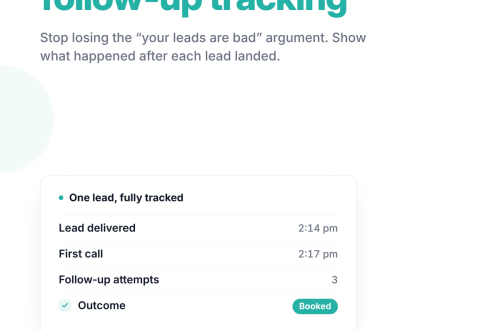
Once I saw the gap, I stopped trusting the top-line lead report and built a simple discipline instead. Every lead got tagged to the campaign and ad set that produced it, from the moment it landed. I tracked each one through qualification, consultation, and payment, so its journey through the pipeline stayed visible end to end instead of scattered across a spreadsheet and three people’s memory. I also started recording the time between a lead arriving and a rep making first contact, and I assigned clear ownership so no lead sat in a shared inbox waiting for someone to claim it.
With that in place, the calculation itself is simple: true CAC equals the Meta ad spend attributable to leads that became customers, divided by the number of new paying customers those leads produced.
A few rules make that number trustworthy rather than comforting.
- Deduplicate before you count. A lead who filled out the form twice is one lead, not two.
- Define what counts as “acquired” before you start, and keep it consistent. A signed contract is a different finish line from a consultation booked, and mixing the two quietly changes your answer.
- Cohort leads by the date they entered the pipeline, not the date they closed. Comparing this month’s ad spend against this month’s closed deals understates CAC for almost any business, since most sales cycles run longer than a few days.
The blended CAC that hid a losing ad set
Years later, reviewing campaign and sales reports for a different team, I ran into a more stubborn version of the same problem. The account-wide CAC looked fine, comfortably fine, even. Underneath that average, though, one ad set was generating a steady stream of leads that almost never converted, while a smaller, cheaper ad set was quietly doing most of the real work.
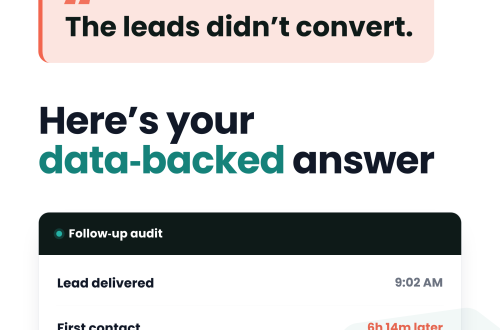
Marketing pointed at sales and said the leads were good, follow-up was the problem. Sales pointed back and said the leads themselves were the problem. Neither side had the data to settle it, because neither side was looking at the same number.
Breaking CAC down by campaign, not account
I connected campaign-level lead records to actual sales outcomes, booked appointments, attended consultations, completed payments, instead of stopping the analysis at “lead received.” Once I could see conversion rate and follow-up delay broken out by campaign and ad set, the picture changed fast. The ad set that looked expensive on a cost-per-lead basis was actually the profitable one. The cheap one was burning budget on leads that were never going to close.
This is also where sending accurate signal back to Meta starts to matter, not just for reporting but for how the campaign spends. Once you know which leads actually became customers, you can send that qualified lead and customer conversion data back to the platform through the Meta Conversions API, where it is appropriate and permitted, so the algorithm has a real outcome to optimize toward instead of a raw lead count. This is the piece of the pipeline I lean on with clients now. A Meta Conversions API CRM like Salesgem keeps the Lead, MQL, SQL, Opportunity, and Converted stages tied to the original ad, and sends qualified leads and closed deals back to Meta using that same lead ID, instead of anyone exporting a spreadsheet by hand.
How clinics, schools, and solar companies see this differently
The math above assumes a sales cycle short enough to judge within a month. A lot of the industries I work with do not get that luxury.
Aesthetic and healthcare clinics often move from inquiry to consultation to a booked procedure over several weeks, and front-desk staff, not trained sales reps, are frequently the ones logging what happened to each lead. If “acquired” means consultation booked for one clinic and payment received for another, two clinics running identical campaigns will report wildly different CAC for the same real performance.
Education and coaching businesses add extra steps of their own. A lead attends a webinar or trial class before enrolling, and enrollment itself might sit weeks away, tied to a cohort start date. Refunds and early dropouts in the first few weeks mean “acquired” at enrollment is not the same thing as “acquired” thirty days later, and most operators never separate the two.
Solar installation sits at the far end. Site visit, quote, financing approval, and installation can stretch the cycle to months. Judging this month’s ad spend against this month’s installs will always make a solar campaign look worse than it is, because the customers converting today were generated two or three months ago.
In every one of these cases, the fix is the one I used earlier. Cohort leads by the date they entered the pipeline, give the cycle enough time to play out, and resist judging a campaign before its leads have had a fair chance to become customers.
My advice for calculating customer acquisition cost from Meta ads
If you take one thing from years of doing this across industries, make it this. Cost per lead tells you how cheap your attention was. Cost per acquired customer tells you whether the campaign made money. Calculate both, but only make budget decisions on the second one.
Three things I ask every sales manager to do before their next ad review:
- Tag every lead to its source campaign and ad set from the moment it arrives, and keep that tag through the entire pipeline.
- Assign ownership and track first-contact time. Slow follow-up quietly inflates CAC in a way no ad report will ever show you.
- Break CAC down by campaign, not account, and give long-cycle businesses enough time before judging a campaign’s performance.
None of this requires more ad spend. It requires knowing where the leads you already paid for actually went. If you want a CRM built around exactly this pipeline, from Facebook and Instagram lead capture through WhatsApp follow-up and back to Meta through CAPI, Sign Up for Salesgem. No credit card needed · 14-day free trial · Free support and migration.
Frequently asked questions
Cost per lead is the amount spent to generate one lead, found by dividing total ad spend by lead volume. Customer acquisition cost is the amount spent to win one paying customer, found by dividing attributable ad spend by new customers. Cost per lead measures volume. Customer acquisition cost measures whether that volume turned into revenue.
Divide the Meta ad spend attributable to leads that became customers by the number of new paying customers those leads produced. This requires tracking each lead from its originating campaign through qualification and payment, rather than comparing a month’s total ad spend to a month’s total closed deals.
It depends on the business, but it needs to be defined once and used consistently. A signed contract, a completed payment, or a booked and attended procedure are all valid definitions. Switching between them from one reporting period to the next makes CAC comparisons meaningless.
An account-wide average can mask the fact that one ad set converts well while another generates leads that rarely close. Breaking CAC down by campaign and ad set, rather than relying on the account total, is the only way to see which spend is actually working.
Long enough for a typical lead from that cohort to have had a fair chance to convert. For a clinic or a solar installer, that often means waiting six to eight weeks, or longer, rather than comparing this month’s spend to this month’s results