Why Facebook leads go cold in 5 minutes
I’ve spent seven years working leads across half a dozen industries, and I’ve watched the same thing happen everywhere. A Facebook lead looks red hot the second it lands, then goes quiet within minutes. It happens because buying intent fades fast, and Facebook lead response time is the single biggest factor in whether that lead ever picks up the phone.
Most teams I’ve worked with lose leads they already paid for. Not because the leads were bad, but because nobody called in time. If you run Facebook or Instagram lead ads for a small business, this is the pattern to fix first, and a proper lead follow up CRM for small business is usually where it starts.
Why a Facebook lead goes cold so fast
Meta builds lead ads to be frictionless.. The person never leaves their feed. They tap an ad, a form pops up, they submit, and they keep scrolling. That’s the whole point of the format, and it’s also the problem.
So the intent is real, but it’s shallow. They weren’t shopping. They were half watching a video and reacted on impulse. That impulse has a short shelf life.
Here’s the part most people miss. Your lead usually filled out three or four ads in the same sitting, because comparison happens inside the feed now. Whoever calls first gets to frame the entire decision. Everyone who calls later is just “one of the other quotes.”
What the Facebook lead response time data actually shows
This isn’t a hunch. It’s one of the most cited findings in sales.
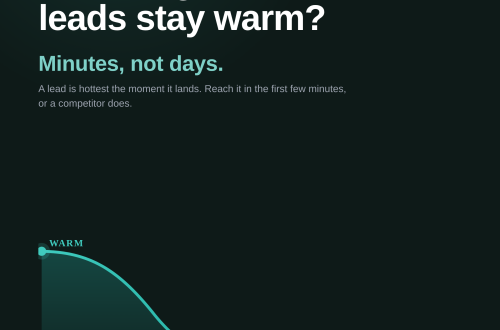
The MIT and InsideSales.com Lead Response Management Study, led by Dr. James Oldroyd, analyzed more than 15,000 leads and over 100,000 call attempts. It found that calling a web lead within five minutes instead of thirty makes you about 100 times more likely to reach them, and about 21 times more likely to qualify them. The odds of qualifying drop roughly fourfold just by waiting from five minutes to ten.
The follow up study, published in Harvard Business Review as “The Short Life of Online Sales Leads,” audited 2,241 companies. The average first response was 42 hours. Nearly a quarter of companies never responded at all.
Read that again. Forty-two hours. By then the lead has already talked to someone else, or forgotten they ever asked.
So the five minute number isn’t magic. It’s just the window where the person still remembers you and still cares. Miss it, and you’re cold-calling a stranger who happens to be on your list.
Meta Instant Forms make it too easy to say yes
There’s a second reason Facebook leads go cold that phone leads don’t share. Meta pre fills the form.
When someone taps a Facebook or Instagram lead ad, Meta already fills in their name, email, and phone from their profile.. All they do is tap submit. It’s one tap. They barely register that they did anything.
That low friction is great for your cost per lead. It’s terrible for recall. The same person who submitted in one tap has no strong memory of the action an hour later, which is exactly why fast Facebook lead response time matters more here than on any other channel.
The lead who swore he never filled out a form
Early in my career I worked with a company that had no real CRM. When leads came in, someone on the sales team logged into the ads dashboard, downloaded a spreadsheet, and worked down the list by hand.
That process took time. On a normal day it was three or four hours before anyone made the first call. And almost every call started the same way. The person on the other end would say, “I didn’t submit any form.”
At first I thought the leads were fake. They weren’t. I eventually realized what was happening: Meta had pre filled the form, the person tapped submit without thinking, and by the time we called, they genuinely didn’t remember doing it.
So we installed a proper CRM. Now the moment a lead came in, the CRM automatically assigned it to a call rep automatically, and the call happened within five minutes. The difference was immediate. The person who filled out the form actually remembered why they filled it out. Within the next quarter, the share of leads that went cold before we reached them dropped by about 79%. Same ads. Same leads Same team. The only thing that changed was response time.
The leads nobody called because everyone assumed someone had
A few years later I came in as a sales manager at another company that handled leads manually. Same story, different building.
We put in a proper CRM there too. The first thing I noticed in the data was that call volume jumped. Reps were suddenly making far more calls than before, with the same headcount.
That confused me, so I dug in. It turned out a large chunk of leads had never been contacted at all under the old system. When I asked the team why, the answer was simple: everyone assumed somebody else had already called.
Nobody owned those leads. They landed in a shared pile, and a shared pile is nobody’s job. The CRM fixed it by assigning each lead to a specific rep the moment it arrived. Once a lead had a name attached to it, it got called. The assumption problem disappeared.
The same problem looks different in every industry
The cold-lead problem is universal, but the shape of it changes by vertical. These are the ones I see it hurt the most.
Aesthetic and healthcare clinics. The front desk is already checking in patients and answering the phone. Working new leads sits at the bottom of that list. Meanwhile the person who submitted is comparing three clinics for a high ticket procedure, and a quiet WhatsApp message often lands better than a cold call.
Solar installers. The rep is on a roof or driving between sites, not sitting at a desk watching for leads. So leads sit for hours while four other installers race to book the first site survey.
Coaching and education. Someone enrolls in their head at 11pm watching an ad. The motivation is real, but it’s gone by breakfast. If you call the next afternoon, you’re talking to a different, calmer person.
Real estate. Agents are mid-showing when the inquiry arrives. Property leads decay fast, because the buyer is messaging whoever answers first.
Different industries, one root cause. The lead came in hot and nobody was set up to catch it.
What I tell every team now
After seven years and a lot of wasted ad spend, my advice comes down to three things.
First, respond in minutes, not hours. You don’t need to be perfect. You need to beat the 42 hour average, which is a low bar most teams still miss.
Second, assign every lead to a person automatically. A lead with an owner gets called. A lead in a shared inbox gets forgotten.
Third, meet people on the channel they’ll actually answer. Plenty of leads who ignore an unknown call will reply to a WhatsApp message in seconds, so a CRM with WhatsApp integration closes gaps a phone-only process can’t.
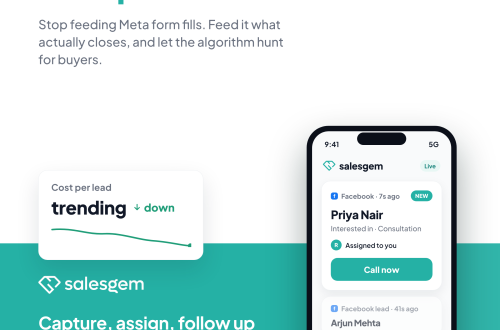
This is exactly what Salesgem is built for. It captures your Facebook and Instagram lead ads through a webhook the moment the form is submitted, assigns each lead to a named rep, and pushes it to their phone so the first call happens while the person still remembers you. If slow follow-up is quietly leaking your ad budget, that’s the gap to close.
You can sign up and try it on your own leads. No credit card needed · 14 day free trial · Free support and migration.
Fast follow up isn’t a growth hack. It’s just calling people back before they forget they asked. salesgem.
Frequently asked questions
A good response time for Facebook leads is under five minutes. Research from MIT and InsideSales.com found that calling within five minutes instead of thirty makes you around 21 times more likely to qualify the lead. Meta pre fills its forms, so recall fades fast. The faster you call, the more likely the person still remembers submitting.
Facebook leads often say they never filled out a form because Meta Instant Forms are pre filled from the user’s profile. The person taps submit in one motion, without typing anything, so the action barely registers. By the time you call hours later, they genuinely don’t remember. Calling within minutes, while the memory is fresh, avoids this almost entirely.
Your Facebook leads go cold fast because lead ads are frictionless and low commitment. People submit on impulse while scrolling, often filling out several ads at once. Intent is real but shallow, and it fades within minutes. Whoever calls first usually wins the deal. Slow follow-up is the most common reason paid Facebook leads never convert.
Yes. A CRM helps Facebook lead follow-up by capturing each lead the instant the form is submitted, assigning it to a specific rep, and alerting them to call right away. This removes the manual spreadsheet download that adds hours of delay, and it stops leads from being missed because everyone assumed someone else would call.
It depends on your audience, and the best approach is often both. Some leads answer an unknown call; many will ignore it but reply to a WhatsApp message within seconds. Leading with a message, then following up with a call, tends to reach more people than a phone-only process, especially in markets where WhatsApp is the default channel