Solo founders running their own sales often lose leads for a simple reason. Nothing is written down, and everything lives in memory instead of a system. The fix is to systemize before you hire. Document your pitch, define clear pipeline stages, and capture every lead in one place. That’s usually a lead follow-up CRM built for small businesses. That way the process keeps working even when you are too busy to answer right away.
I have spent more than ten years as a sales consultant across clinics, coaching businesses, solar installers, and small agencies. The founders I meet all describe the same stretch of their business the same way. They are closing deals, running the product, and answering support messages. Somehow they are also supposed to be the fastest responder to every lead that comes in from Facebook or Instagram.
For a while, it works. Then it stops working, usually right around the point where the founder starts thinking about their first sales hire.
This is the part nobody warns you about. The skill of selling and the existence of a sales process are two different things. Most solo founders only discover the gap once they try to hand the job to someone else.
When busy and losing leads look like the same problem
I remember working with a founder who was convinced his ad campaigns had stopped working. The leads were coming in at the same volume and cost as before, but conversions had dropped by nearly half.
When we looked closer, nothing was wrong with the ads. Facebook and Instagram inquiries were arriving while he was deep in product work, customer support, or operations. By the time he opened WhatsApp to check, several prospects had already booked with a competitor.
I see this constantly in clinics, where the owner is often also the practitioner. A dermatologist I worked with was replying to Instagram DMs about treatment pricing between patients. Some messages sat unread for hours during a full clinic day. It happens in coaching businesses too. One client launching a new cohort lost several signups in a single week. Enrollment questions came in while she was teaching a live session. By the time class ended, the prospect had enrolled somewhere else.
The lesson that stuck with me was simple. Being busy and losing leads can look identical from the outside, but they have different fixes. You cannot fix being busy. You can fix how leads are tracked while you are busy.
Stop relying on memory, start relying on a system
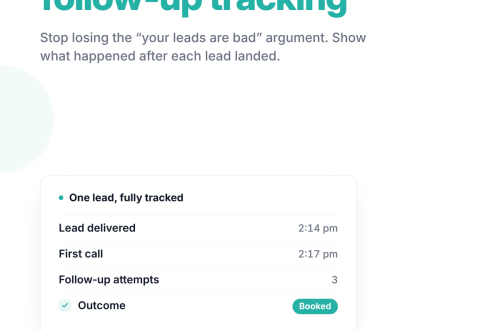
The change that helped most was simple. Stop relying on memory and use a CRM as the single place every lead lives. Each inquiry gets an owner, a follow-up task, a defined stage, and a record of the last conversation. Automated reminders catch leads before they go cold, even on the days nothing goes according to plan.
What to do before you hire: set up a CRM before you hire anyone. Capture leads automatically from Facebook, Instagram, and WhatsApp so nothing depends on you remembering to check a chat thread. Define a short list of pipeline stages, and review overdue follow-ups daily, even if it only takes five minutes. Your sales process should keep working on the days you cannot check your phone.
Knowing how to sell is not the same as having a process you can hand off
The second lesson took longer to learn. After running sales alone for long enough, I assumed that knowing how to sell meant I had a sales process. I did not.
The opening message I used, the qualification questions I asked, and the objections I expected all lived in my head. So did the timing of my follow-ups. None of it existed anywhere a new hire could read.
I saw what that gap costs with a solar installation founder I worked with. He finally brought on his first sales rep after two years of running every quote request himself. The rep was capable and had sold before, just not solar, and definitely not this founder’s version of it.
Within the first month, the rep called the same homeowner twice because there was no record of the first conversation. He also missed following up on three site visit requests entirely. There was no shared list of who was waiting on what. The founder ended up sitting beside the rep for weeks, repeating decisions he had made instinctively for two years. None of it had ever been written down.
Turn your instincts into something the next person can use
What actually fixes this is turning your own selling habits into something repeatable before you need to. A CRM helps here too, not as a place to store contacts. It is the structure that shows what should happen next at every stage. Activity history preserves the actual conversation instead of a vague memory of it. Follow-up tasks assign responsibility clearly, so nothing depends on someone happening to remember. Writing down the objections you hear most often, along with the responses that have worked, helps too. It turns your instinct into something the next person can actually use.
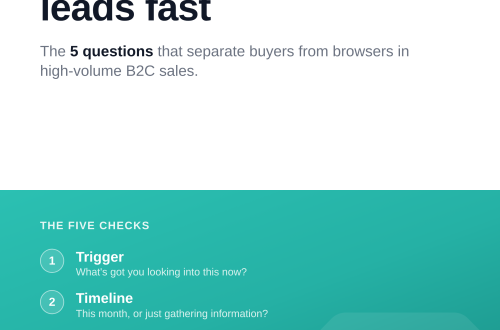
What to do before you hire: write down your first contact message and your qualification questions. Note your most common objections and how you answer them. Write down what happens next at each stage. Use CRM reports to track response time, conversion rate, and leads that have gone quiet. Once the process runs consistently without you personally remembering every detail, you can hand it to someone new. They won’t lose visibility, and they won’t start from zero.
Why this matters more the smaller your team is
Every founder I have worked with eventually asks some version of the same question. Do I really need a formal process if it is just me?
The answer I give now is that the process matters most while it is just you. That is when nothing is backed up. If a founder travels, gets sick, or spends a week deep in fundraising, leads still need to move. They cannot wait for the founder to be physically present to push each one forward. A documented pipeline does that. A memory does not.
This shows up differently depending on the industry, but the shape stays the same. In real estate, an agent juggling showings cannot be the only person tracking leads. They need to know who has been contacted and who has not. In home services and similar field based businesses, the person doing the work usually has to respond to leads too. They are rarely near a phone at the same time.
Across every vertical I have worked in, the founders who systemized early were not necessarily better salespeople. They were the ones who stopped trusting memory before it cost them a deal they could not get back.
Advice from ten years of watching this pattern repeat
If you are a solo founder still doing all your own sales, the fix is smaller than it feels. A sales team is not the requirement here, a sales process is. Start with every lead captured the moment it arrives. Add a short set of stages showing where each lead stands, plus a record of what was said. Round it out with a written version of the pitch and objections that currently only exist in your head.
Salesgem builds its lead follow-up CRM for small businesses specifically for this stage, before the hire, not after it. Setting one up while you are still the only person selling pays off later. Your first hire inherits a working system instead of a blank page. No credit card needed, and a 14-day free trial. Free support and migration too, if you are moving off WhatsApp and spreadsheets. I have seen the difference it makes in how fast a new rep gets up to speed. I have also seen how many leads survive the handoff instead of disappearing somewhere between your memory and theirs.
If you want more on this, I wrote about it elsewhere. See why the sales rep’s phone shouldn’t be the CRM for the deeper argument. For the practical side, there’s building a lead follow-up cadence that holds up once someone else is running it.
When you are ready, sign up and build your pipeline first. Do it before your next hire, not after.
Frequently asked questions
Hire once lead volume is consistently more than you can respond to within an hour or two. Do not wait until you simply feel overwhelmed. If leads are already going cold because of your schedule, systemize first. Hiring into a broken process just makes the gaps visible faster.
At minimum, write down your first contact message and your qualification questions. Note your most common objections and how you answer them. Also map the stages a lead moves through, from inquiry to close. This becomes the training material your hire would otherwise learn by shadowing you for months.
No, a CRM does not sell for you. What it does is capture leads automatically, track where each one stands, and remind you before a follow-up is missed. The leads you would otherwise forget about stay visible until you can act on them.
If you cannot say how long it typically takes you to respond to a new lead, that’s a warning sign. Leads from Facebook, Instagram, and WhatsApp ads tend to compare you to whoever replies first. Hours matter more than most founders expect.
Start by capturing every lead automatically in one place instead of across WhatsApp, email, and memory. Everything else, the stages, the scripts, the follow-up tasks, builds on having that single source of truth in place first.