Low Facebook lead quality is usually a follow-up problem wearing a targeting costume. Before you change the audience, check three things: how fast each lead was contacted, who owned it, and how many attempts were logged. In most campaigns I have reviewed, the targeting was fine. The response time was the thing quietly killing the numbers.
Ten years of hearing the same sentence
I have spent more than a decade running sales teams and working with clients across clinics, coaching centres, solar, home services and dealerships. Different products, different price points, different markets. One sentence shows up in every single one of them.
“The Facebook leads are terrible.”
For a long time I took that at face value. When a rep who has been on the phone all week tells you the leads are junk, you believe them. So we would rebuild the audience, swap the creative, tighten the form, and wait for better numbers. Sometimes the numbers moved a little. Usually they did not.
Facebook lead quality is the easiest thing in the world to blame, because nobody in the room can disprove it. Then I started reading timestamps instead of listening to opinions, and the whole picture changed. If you run Facebook Lead Ads through a CRM, the timestamps are already sitting there. Almost nobody looks at them.
The campaign where Facebook lead quality was never the problem
A few years back, my sales team was certain a campaign had gone bad. The marketing side looked healthy. Leads were coming in every day, cost per lead was acceptable, and the targeting had not changed in weeks. Sales was closing almost none of them.
My first instinct was to question the targeting too. Then I pulled the raw lead list and lined the submission times up against the first call times.
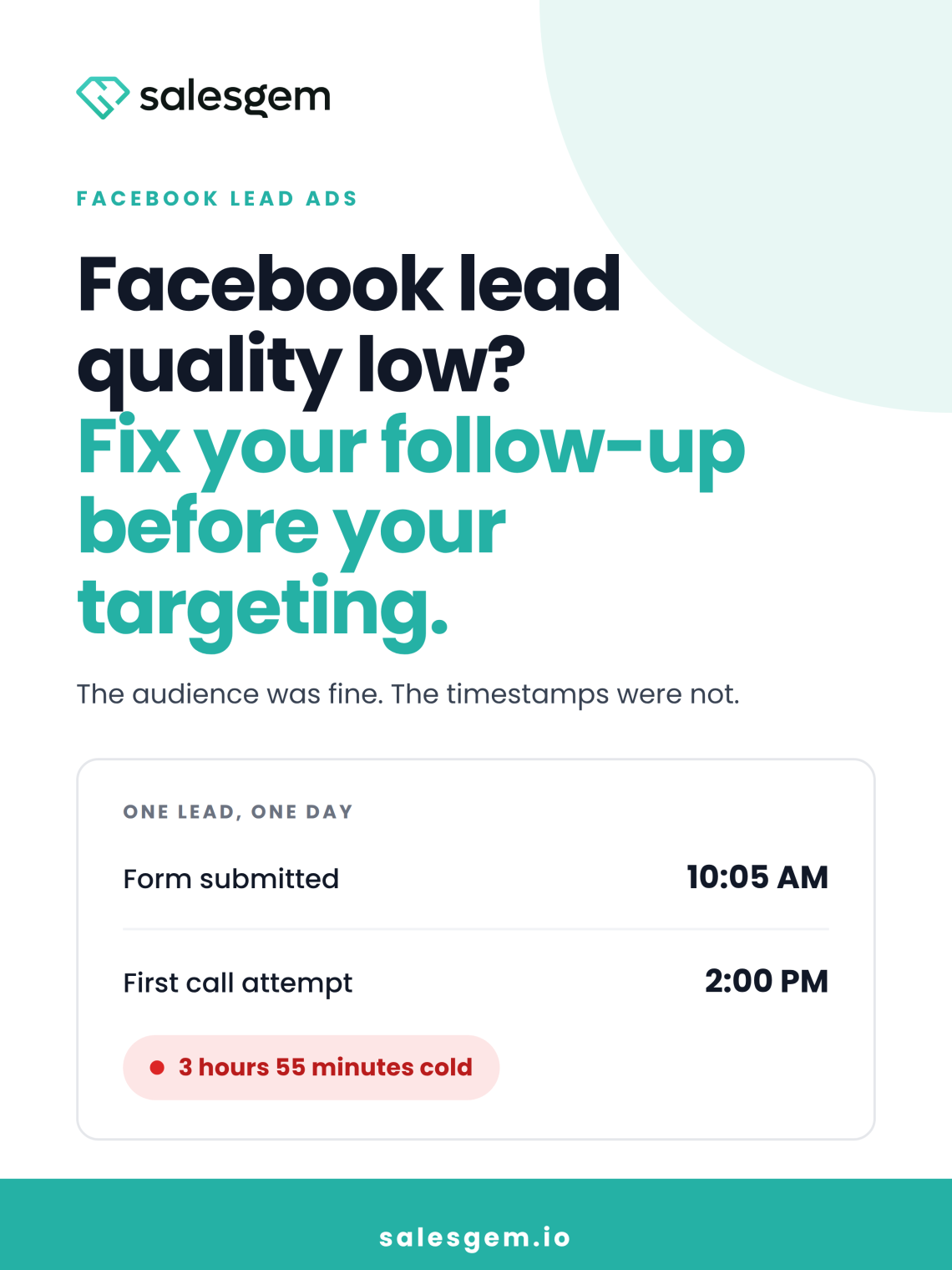
A lead would submit a Facebook form at 10:05 in the morning. The rep might call at 2 in the afternoon. Some leads sat even longer than that before anyone picked them up. When the prospect did not answer that late call, the rep marked the record “not interested” or “bad lead” and moved on.
That is the moment I stopped looking at lead quality and started looking at time to first contact.
We changed the process instead of the audience. New leads were assigned the moment they arrived, and reps were expected to call while the lead was still warm. Nothing about the campaign changed. Same budget, same creative, same audience.
The next batch told a completely different story. Leads that had looked worthless the month before started turning into real conversations and booked appointments.
The second time, I checked before I approved anything
Believing the loudest complaint in the room is the easiest mistake a sales manager can make. A while later, another campaign came up for execution. Reps said the leads were “just asking for information,” nobody was answering the phone, and the campaign was not producing sales. Marketing was already drafting a plan to move that budget to a different audience.
Before I approved it, I pulled the lead list again and compared submission times with first contact times.
The problem was obvious inside ten minutes. Most leads were not being contacted quickly. Several had no recorded first attempt for hours. A few had been called by two different reps, because nobody had clearly claimed them.
We were not measuring Facebook lead quality at all. We were measuring the output of a messy follow-up process and writing “lead quality” on the label.
So we fixed ownership instead of targeting. Every new lead got assigned to a specific rep, first contact time was tracked, and managers could finally see which leads were sitting untouched. The campaign did not become a different campaign. Our handling of it became different, and the results followed.
What the research actually says about response time
My experience is not unusual, and the numbers back it up. In the March 2011 Harvard Business Review article “The Short Life of Online Sales Leads,” James Oldroyd, Kristina McElheran and David Elkington audited 2,241 US companies with a test web lead. Only 37% responded within an hour. Another 16% replied within one to 24 hours, 24% took longer than a day, and 23% never responded at all. Among the companies that did respond within 30 days, the average first response took 42 hours.
In a separate dataset covering 1.25 million leads across 29 B2C and 13 B2B firms, the same authors found that firms contacting a prospect within an hour were nearly seven times as likely to qualify that lead, which they defined as a meaningful conversation with a key decision maker, than firms that tried an hour later. Against companies that waited 24 hours or more, the gap was over 60 times.
There is an older number people quote constantly: calling in five minutes rather than 30 makes contact roughly 100 times more likely and qualification 21 times more likely. That one comes from the 2007 Lead Response Management study of InsideSales.com platform data, analysed by Oldroyd while he was at MIT Sloan. It gets credited to Harvard all the time, which is wrong, and mixing the two studies up is the fastest way to lose credibility in a meeting. Keep them separate.
Either way, the direction is the same. Speed decides the outcome long before the audience does.
Facebook lead quality problems look different in every industry
The pattern is universal, but the failure mode changes by vertical. Here is what I actually see.
Clinics and aesthetic practices
Reception owns follow-up between patients, so a Facebook enquiry about a procedure waits for a gap in the front desk’s day. Meanwhile the prospect has messaged three other clinics that same evening and books with whoever calls back first. Consultations also need several touches over several days, so one missed call gets logged as “not interested” when it only needed a second attempt.
Solar installers
This is a considered, high value purchase, and the fifth touch often closes what the first one could not. Homeowners are usually collecting quotes from three installers at once. The first installer to book the site visit tends to win, regardless of who was actually cheaper.
Education and coaching
Parents fill forms at 10pm after the kids are asleep. By the time somebody calls during business hours the next day, the moment is gone. Enrolment also involves two decision makers, so a rep treating it as a one call close reads a normal multi party decision as a dead lead.
Home services
These leads decay in minutes. An owner operator who is halfway through a job when the form comes in has usually lost the customer before he ever sees the notification.
Dealerships
Leads pass through an internet desk before they reach floor sales. When that handoff is slow, floor reps blame “internet leads” while the real delay lives in the routing step between the two.
Three questions before you blame targeting
When sales tells me the leads are bad now, I no longer forward that to marketing. I ask three questions first.
- How quickly did we contact them? Pull the median time from form submission to first attempt, not the average, because two fast calls will hide twenty slow ones.
- Who owned each lead? If a lead has no named owner, it has no follow-up. If it has two owners, it has an annoyed prospect.
- What follow-up actually happened? Count the attempts per lead and the channels used. One unanswered call at 4pm is not follow-up.
If those answers are not clear, you have not earned the right to blame targeting yet.
The two week follow up test
Before you touch a single audience setting, run this. It costs nothing and it settles the argument with data instead of opinions.
- Freeze the campaign exactly as it is. Same audience, same creative, same budget, same form. Change nothing on the marketing side for two weeks.
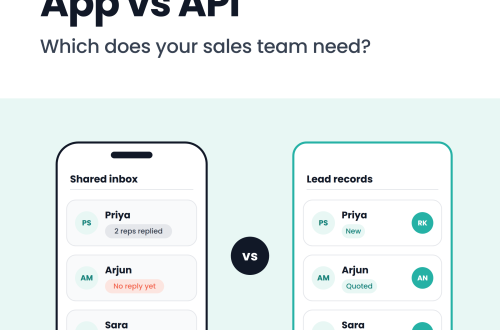
- Assign every new lead to a named rep automatically, at the moment it arrives. No shared inbox, no spreadsheet, no “whoever gets to it.”
- Set a first contact target the team can actually hit and publish it. Fast enough to matter, realistic enough that nobody games it.
- Log every attempt, on every channel, including the ones that got no answer.
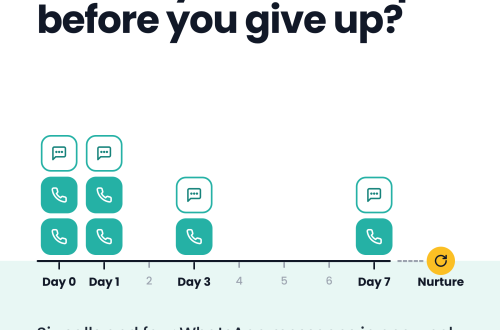
- Require a minimum number of attempts before any lead can be marked dead. I use five across call and WhatsApp, spread over several days.
- Review the median first contact time every morning with the team, the way you would review revenue.
After fourteen days, compare conversations, appointments and closes against the fortnight before. If the numbers lift on identical targeting, your Facebook lead quality was never the issue. If they stay flat and follow up was genuinely fast, now you have a real case for changing the audience, and marketing will take you seriously because you brought evidence.
Most of this is a tracking problem rather than a talent problem, which is why we built Salesgem to capture Facebook and Instagram leads as they come in, assign each one to a rep, and show managers what is still sitting untouched. You can Sign Up and run the two week test on your own pipeline. No credit card needed, 14 day free trial, free support and migration.
What I would tell you after ten years of this
Bad targeting exists, and sometimes Facebook lead quality really is the problem. I have killed campaigns that deserved to die. But in my experience, that verdict comes maybe one time in five, and it never arrives on the first complaint.
A lead sitting untouched for four hours is not evidence that Facebook targeting failed. It is evidence that the sales process failed first, and the targeting simply took the blame because it was easier to blame.
So check the timestamps before the audience. Fix ownership before you rebuild a lookalike audience. Give the follow-up two honest weeks under the same campaign settings, and let the numbers tell you which half of the funnel was actually broken.
Most of the time, the leads were fine. We were just late.
Frequently asked questions
Facebook lead quality is often low because of slow follow-up rather than poor targeting. Lead ad forms are prefilled, so people submit them casually and expect a quick reply. When the first call comes hours later, the prospect has cooled off or already spoken to a competitor. Check your median time to first contact before you change the audience.
Call a Facebook lead as fast as your team can realistically sustain. The 2011 Harvard Business Review research found that firms contacting a prospect within an hour were nearly seven times as likely to qualify the lead as firms that tried an hour later. The exact target matters less than making it consistent, measured and owned by a named rep.
Facebook lead ads leads usually show lower intent than website form leads, because the form is prefilled and takes one tap to submit. That is a real difference, but it is a reason to follow up faster and more often, not a reason to write the channel off. Adjust your attempt count and speed before you adjust targeting.
Freeze the campaign and fix follow-up for two weeks. Keep the audience, creative and budget identical, then assign leads instantly, track first contact time and log every attempt. If conversations and appointments rise on unchanged targeting, follow-up was the problem. If they stay flat despite fast contact, the audience is worth investigating.
Most teams give up after one or two attempts, which is far too early for a prefilled form lead. Set a minimum of five attempts across phone and WhatsApp, spread across several days and different times of day, before a lead can be marked dead. Reps should also record what happened on each attempt, not only that they tried.
Changing the audience rarely fixes low Facebook lead quality on its own. A new audience feeding the same slow follow-up process produces the same result, and you lose the learning phase performance you had already paid for. Fix assignment and response time first, then change targeting only if the numbers stay flat.