A lead is going cold when three things start happening: reply times stretch from minutes to days, answers get vaguer with each message, and “call me later” replaces actual questions. You can usually revive a cooling lead with one of three plays — bring new information, attach a real deadline, or switch channels. And when none of those work, the right move is to stop chasing and recycle the lead into a nurture list, not to keep haunting them. Good lead follow-up is mostly about catching the cooling early enough that revival is still possible.
I’ve spent over ten years consulting for sales teams, and here’s the thing that took me embarrassingly long to accept: the deals that hurt most were almost never lost to a competitor’s better pitch. They died silently. The lead never said no. They just… slowed down. And by the time anyone noticed, they’d bought somewhere else.
A lead who says “this is too expensive” is giving you something to work with — an objection you can answer. A lead who says “looks good, call me later” has usually already left. They’re just too polite to say so. Learning to tell the difference is the skill.
The three warning signals
1. Reply latency starts stretching
This is the earliest and most reliable signal, and almost nobody tracks it.
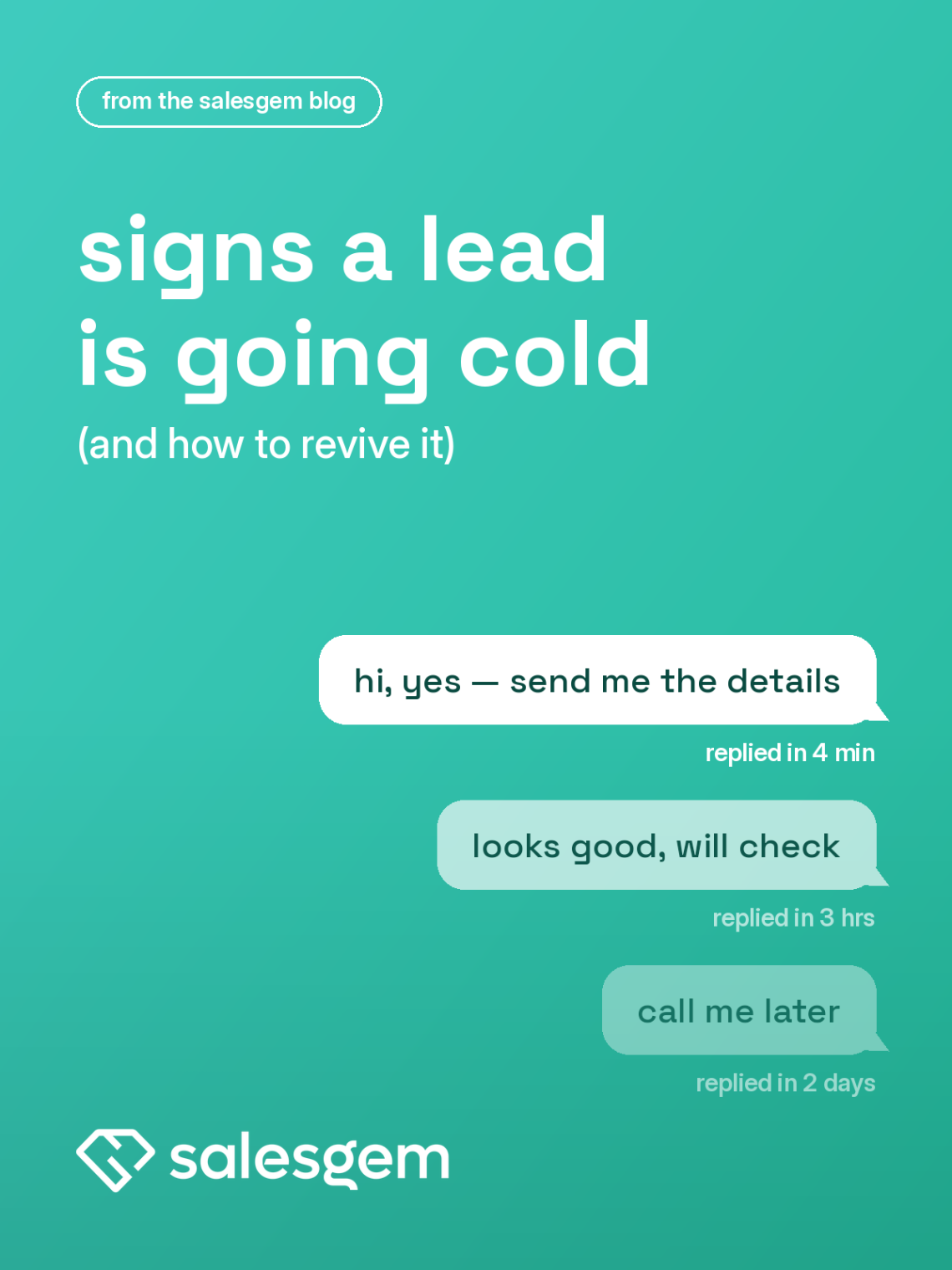
A warm lead replies in minutes. Then hours. Then two days. Each individual reply looks fine on its own — they are still replying — so nothing feels wrong. But the gap is the message. Interest and response time move together, and when the gap doubles twice in a row, the lead is cooling whether or not the words say so.
I once sat with a rep reviewing a deal he swore was alive. We laid the messages out on a timeline: first reply in 4 minutes, second in 3 hours, third in 2 days, fourth pending for a week. He’d never seen it laid out that way. The moment he did, he said, “oh. she’s gone.” She was.
2. Answers get vague
Early in a real enquiry, questions are specific. What does the package include. Can I start in March. Does the price cover follow-up visits. Specific questions mean the person is running your offer against their actual life.
When the answers coming back shrink to “sounds good,” “we’ll see,” “let me think about it” — with no new questions attached — the internal comparison has stopped. Or worse, it’s continuing with someone else.
3. “Call me later”
The politest sentence in sales, and usually a no wearing a coat.
The test is whether “later” has a shape. “Call me Thursday after 4” is a real instruction from someone managing a busy week. “Call me later,” full stop, with no time attached, is a door closing slowly so nobody has to hear it slam.
Why good reps miss all three
In ten years I’ve watched the same three failure modes on nearly every team I’ve worked with, regardless of industry.
No visibility. Most small teams run leads out of an inbox, a spreadsheet, or Meta’s Lead Center. There’s no timeline. A rep cannot notice reply latency stretching if no system shows them the gaps — human memory is terrible at this. Everyone remembers the last message; nobody remembers how long it took.
Effort misallocation. Without cooling signals, reps spend energy by loudness instead of warmth. The chatty lead who’ll never buy gets five calls. The quiet lead who replied fast and asked about pricing gets forgotten. I’ve audited pipelines where the majority of follow-up effort was going to leads that had been showing cold signals for two weeks.
The blame loop. When cold leads pile up invisibly, marketing says sales didn’t follow up, sales says the leads were junk, and the owner believes whoever spoke last. Nobody pulls the timing data, because there isn’t any. I’ve been hired more than once to referee exactly this argument, and the answer is almost always the same: the leads were fine, the first response was fine, and everything after day three fell into a hole.
The cooling curve looks different in every industry
Three verticals where I’ve done the most work, and what going cold actually looks like in each.
Healthcare and aesthetic clinics
A clinic enquiry is a high-consideration, high-anxiety purchase — and it happens in an emotional moment, not a scheduled one. Someone messages a hair transplant clinic at 11pm after two hours of looking at before-and-after photos. That’s the peak. Every hour after it, the emotion cools and the doubt returns.
The part clinics underestimate: comparison shopping here is silent. The same person messaged three other clinics that night. You’ll never see it. So when the enthusiastic first message turns into vagueness about booking the consult, it usually doesn’t mean they lost interest in the procedure. It means another clinic answered faster and got the consultation slot while yours was drafting a reply.
Education and coaching
Education has a problem I call the two-speed decision-maker. The student wants an answer tonight — they enquired, they’re excited, they want to enrol. The parent paying for it wants to wait, compare three institutes, and ask a cousin. One enquiry, two clocks. If you only talk to one of them, the other’s silence reads as a cold lead when it’s actually an unfinished conversation.
The other thing: batch deadlines are hard cutoffs. A lead that goes quiet ten days before enrolment closes can still be revived. A lead that’s still quiet the day after the batch starts isn’t cold, it’s dead — for this cycle. That distinction matters for what you do next, which I’ll get to.
Residential real estate
The fastest-decaying leads of any vertical I’ve touched. A portal or Facebook enquiry about a listing is answered by whoever calls first, and the buyer is talking to four agents simultaneously as a matter of course. Cooling here isn’t measured in days; it’s measured in hours. A real estate lead showing stretched reply latency on day two is usually already viewing properties with someone else.
The three revival plays
When you catch the signals early, these work. Roughly in order of how often I’ve seen them succeed.
1. Bring new information. “Just checking in” gives the lead nothing to respond to, and every “just following up” message makes the next one easier to ignore. Bring something instead: the price changed, a consult slot opened this week, a new case result that matches their situation, a unit came back on the market. New information gives a fair reason to reply that doesn’t require them to explain their silence.
2. Attach a real deadline. Not fake scarcity — people smell it. But most businesses sit on genuine deadlines and never use them. The batch closes Friday. The offer pricing ends this month. The doctor’s calendar for March has two slots left. A true deadline converts “later” into “now or not,” and either answer is better than drift.
3. Switch channels. Three unanswered emails is not an argument for a fourth email. It’s evidence the person doesn’t live in their inbox. Move to WhatsApp, or pick up the phone. I’ve watched leads that ignored a week of email reply to a WhatsApp message in nine minutes — not because the message was better, but because it arrived where they actually look.
When to stop and recycle
Here’s the part most advice skips: some leads should not be revived, and continuing to chase them costs you the warm ones.
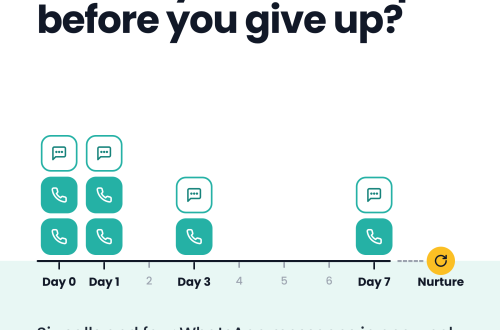
My working rule, and the one I give every client: two to three revival attempts, across at least two channels, over about two weeks. If there’s still nothing, stop working the lead as active pipeline. Don’t delete it — recycle it to nurture. That means one low-pressure, genuinely useful touch a month: a result, a new offer, a batch announcement. No “did you get my last message.”
In education this maps neatly to cycles — the lead who missed this batch gets nurtured toward the next one, and a surprising number come back. In clinics, the person who went silent in January often re-enquires in April when the wedding date gets real. Nurture is where those returns come from. Chasing is where they get killed.
The line I use with reps: know the difference between working a lead and haunting one.
What I’d tell you after ten years of this
Cold leads are mostly a detection problem, not a persuasion problem. Every team I’ve worked with wanted better revival scripts, and almost none of them could tell me, for any given lead, how long the last three reply gaps were. You can’t act on a signal you can’t see.
So the fix is unglamorous: get every lead’s history — messages, logged calls, follow-up tasks — onto one timeline, per lead, visible to the rep who owns it. That’s it. That’s most of the battle. Teams running Facebook and Instagram lead ads are the ones bleeding worst here, because Meta’s Lead Center gives you a CSV, not a timeline. This is the problem Salesgem was built around: the lead lands on the assigned rep’s phone in 10 seconds, and every call the rep logs and every follow-up task they set sits on that lead’s timeline where the cooling is visible while there’s still time to act on it. The teams I’ve seen fix their follow-up speed first rarely need the revival plays at all — which is the whole point of the 5-minute rule.
Catch the latency stretch early, bring something new when you re-engage, respect the real deadlines, and have the discipline to move the ghosts to nurture. If you want the timeline part handled, you can sign up for Salesgem and see your own leads’ reply gaps this week.
No credit card needed · 14-day free trial · Free support and migration
FAQ
You know a lead is going cold when three signals appear: reply times stretch (minutes become hours become days), answers lose specificity (“sounds good” replaces real questions), and “call me later” arrives without a specific time attached. Reply latency is the earliest signal — track the gap between your message and their response, and treat two consecutive doublings as a warning.
You revive a cold lead with one of three plays: bring new information (a price change, an open slot, a relevant result) so they have a fair reason to reply; attach a genuine deadline like a batch close or offer window; or switch channels — if email is being ignored, move to WhatsApp or a call.
Follow up two to three times across at least two different channels over roughly two weeks. If there’s still no response, stop working the lead as active pipeline and move it to a nurture list instead of deleting it. Continuing past that point rarely converts and takes attention away from warmer leads.
Recycling a lead to nurture means moving an unresponsive lead out of your active pipeline and into a low-frequency, low-pressure track — one useful touch a month, like a new result, offer, or batch announcement. Many leads re-enquire when their timing changes, and nurture keeps you present without chasing.
Real estate leads go cold fast because buyers enquire with several agents at once and the first useful response usually wins the relationship. Cooling is measured in hours, not days — a listing enquiry showing stretched reply times by day two is often already viewing properties with a competing agent.